
Biosecurity New Zealand has released the New Zealand Established Pests Portal (NZEPP), a new digital tool designed to make pest information more accessible and coordinated across the country.
NZEPP addresses a long-standing challenge in the biosecurity system: fragmented information on established pests. Until now, data on pest animals, plants, marine and freshwater species, and pathogens has been distributed across multiple platforms, limiting visibility and coordination.
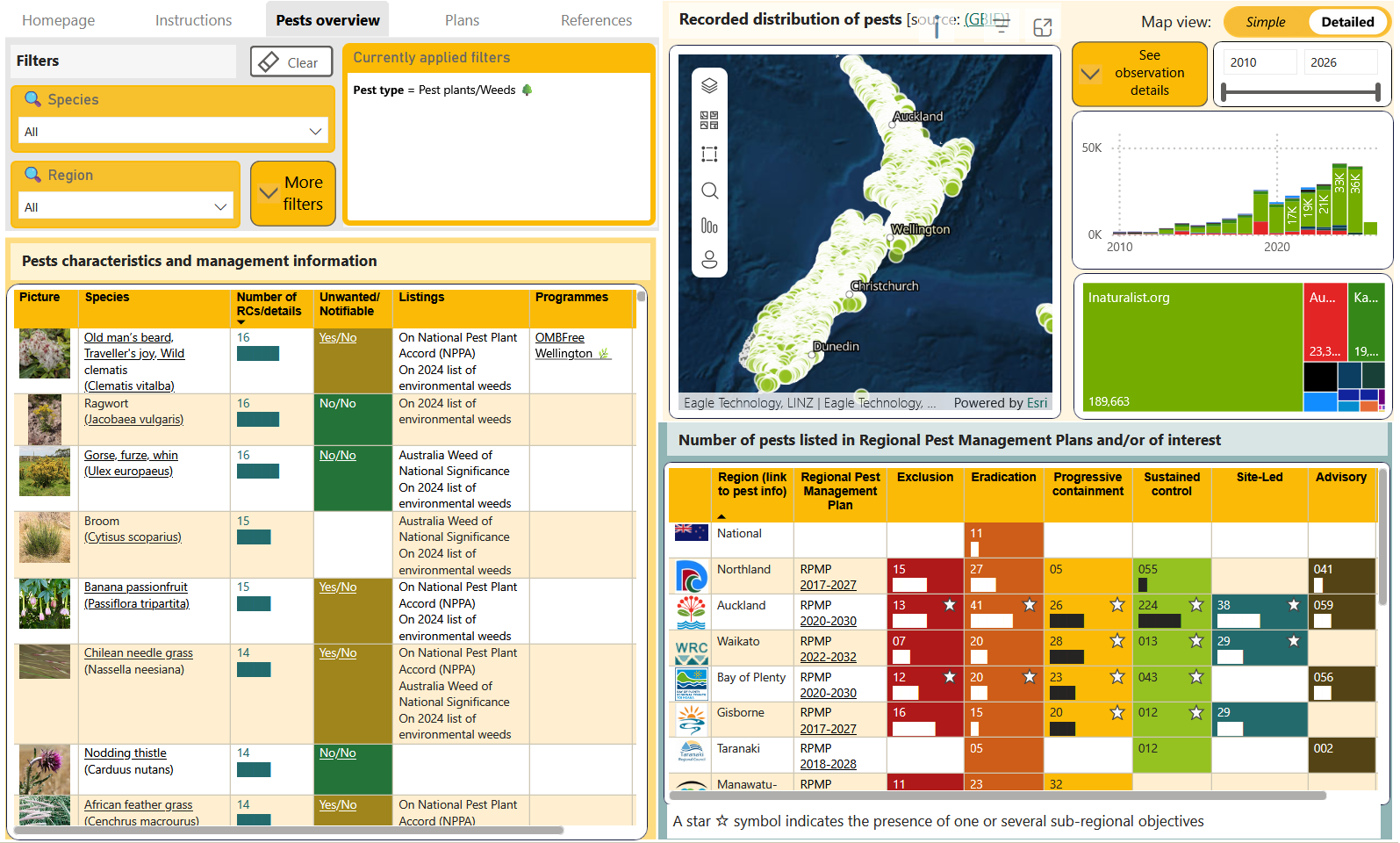
The portal consolidates key information—including recorded distribution, management programmes, regulatory status, and links to resources—into one accessible platform. It connects trusted sources such as the Official New Zealand Pest Register and GBIF. GBIF provides species occurrence data that helps populate NZEPP, and as more established pest records are mobilised to GBIF, the portal will become increasingly comprehensive.
NZEPP also incorporates research grade observations from iNaturalist, enabling citizen scientists to contribute directly. The portal supports recommendations from the Parliamentary Commissioner for the Environment’s Space Invaders report and aligns with Action 3 of the Biosecurity System Action Plan, which focuses on improving integration and use of biosecurity data. The portal is designed for sustainability and future growth, with ongoing updates and enhancements planned. Feedback and suggestions for improvements are welcomed via nzepp@mpi.govt.nz.
➡ Explore the portal: https://www.mpi.govt.nz/biosecurity/how-to-find-report-and-prevent-pests-and-diseases/new-zealand-established-pests-portal/
Why it matters
Established pests pose significant risks to New Zealand’s biodiversity, primary industries, and communities. By aggregating information from multiple sources—including GBIF occurrence data—NZEPP improves visibility and coordination across agencies, iwi, researchers, and the public.
The more data that is mobilised and shared through GBIF, the more powerful and complete NZEPP becomes as a national resource for biosecurity awareness, management, and decision-making.
Help strengthen NZEPP: publish your data to GBIF
NZEPP is only as strong as the data behind it. If your organisation holds datasets on established pests—such as historical records, monitoring datasets, survey results, or curated collections—publishing them to GBIF is one of the most effective ways to contribute.
Every established pest’s dataset published to GBIF feeds directly into NZEPP’s species occurrence layer. Mobilising additional pest datasets will help improve the accuracy, completeness, and utility of the portal for the entire biosecurity system.
If you are aware of established pest data that is not yet publicly available, please get in touch.